
Psalm 42:5 Why art thou cast down, O my soul? and why art thou disquieted in me? hope thou in God: for I shall yet praise him for the help of his countenance.
Psalm 42:11 Why art thou cast down, O my soul? and why art thou disquieted within me? hope thou in God: for I shall yet praise him, who is the health of my countenance, and my God.
About nine years ago, I suddenly had strong bouts of anxiety. Prior to this time, I was the “suck it up”, “it’s in your head”, “you’re overthinking it,” type. I thought anxiety, depression, and the like were for either weak-minded or selfish people. Until it hit me. It’s amazing how our perspective on things changes when it’s now us.
I felt like I couldn’t breathe. I was fearful. There was uncertainty. I would even leave church in the middle of service “not feeling well” when it would set in. I wondered if I would ever get out of the cycle. I tried breathing techniques. I called a Christian counselor. I did research and read up on remedies for this condition. (PS I’m being more honest than I planned to when I picked up the Scriptures this AM or began writing this post).
Psalm 42:11 helped me greatly. In the verse above, David had been driven from the house of the Lord. He lived in uncertainty. There was much to fear. There was reason for sorrow. And there was no end in sight. David had a conversation with himself that was very helpful. These principles from David’s conversation with his soul that can help when our soul needs calming.
Before we do, I think looking at David’s inner turmoil will help us to relate with what he was going through. I see three areas of inner turmoil, or at least, the temptation to fall into them. I see depression, sorrow, and anxiety.
Cast down (שָׁחַח shâchach, shaw-khakh’) = to sink or depress; bend, bow (down), bring (cast) down, couch, be (bring) low, stoop. David felt depressed. His soul was sunk down. He felt hunched over. As in a pit, in the dust, struggling to get back “on top side”.
Mourning (קָדַר qâdar, kaw-dar’) and Tears (דִּמְעָה dimʻâh, dim-aw’) = weeping, sorrow. One chapter prior, he had been betrayed. He was driven from his family, and from the church. He missed the singing, the fellowship, and the life he had known before.
Disquieted (הָמָה hâmâh, haw-maw’) = made uneasy or restless; disturbed; harassed, to be in great commotion or tumult, be disquieted, troubled, mourn, be moved (like bowels move), make a noise (within, a noise that I cannot hold my peace, – same word in Jer 4:19), rage, roar (like waves Jer 5:22, 6:22, 31:35, 50:42, 51:55), sound, be troubled (like troubled bowels), make in tumult (Acts 31:34), tumultuous. His soul was anxious, almost uncontrollable. His mind, and emotions, were like a tumult of people that cannot be controlled, or uneasy bowels that we can do nothing about, or waves that roll and roar at sailors on a boat, and they are at the mercy of the sea. Those of us who have experienced anxiety know what it’s like to be in that boat, dwarfed by the growing wave, ready to be tossed about, seemingly at its mercy.
So then what did David do? What was his remedy? How can we apply it in our situation?
1. Hope. No matter the situation, let us always remember that with God, there. is. hope. There’s hope in the sorrow. There’s hope in the depression. There’s hope in the midst of the anxiousness. God is a God of hope. When these within us arise, HOPE IN GOD! We can go through the most dire of situations if we hold on to the fact that with God, there is hope, and there are much better days ahead with Him.
2. Praise. In the midst of the worst situations, David made it a habit to praise. This helped me much. I realized that in a crowd of people, or alone in the car, I can turn my mind toward the Lord, and focus on praising Him for Who He is, and what He does. I’ve experienced this firsthand- when I get into praising the Lord, so much of the inner turmoil ceases. The more I focus on praise, the less any inner situation is in view.
3. Claim. David gives us a great promise here. It helped him. And more than any other promise, this one helped me. David tells us that the Lord is the health of our countenance. What is there to claim? What does that mean? Notice what God is to us when these things come.
The health (יְשׁוּעָה yᵉshûwʻâh, yesh-oo’-aw) something saved, i.e. (abstractly) deliverance; hence, aid, victory, prosperity:—deliverance, health, help(-ing), salvation, save, saving (health), welfare. Simply put, health here means salvation, help, and/or deliverance from whatever it is that would cause our countenance to fall, or change, or lose it’s joy, or peace, or steadfastness.
Thus, when sorrow comes as it will, when depression tries to rear its ugly head, or anxiety like those waves attempt to arise, remember, GOD IS the health (salvation) of our countenance. Not, He may be. Not, He will be. HE IS! Right here. Right now. He is here to help me, to save me. This is a fact and a promise from the word of God. Meditate on it. Quote it. Claim it.
When these things attempt to overtake our soul, let’s do the things David did. Realize there’s hope in God. Begin to praise. And claim the promise of the Lord as the health of my countenance right now.


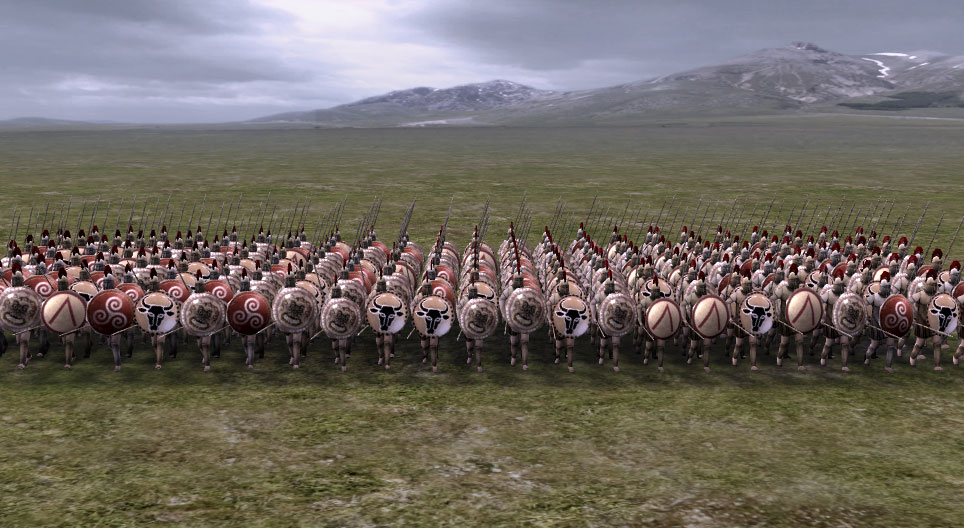

 Separation and technology – Most of us have heard the story written about the Greek and Trojan war. As it goes, the Greeks and Trojans had been at war for ten long years. Time and again the Greeks sought to gain victory against the Trojans, but without avail. There was a certain city, called Troy, that stood independent, and that could not be taken even by a great general (general Ulysses) with a strong force (the feared Greek army). The city was strong. It was fortified. It was built to stand the test of time, and to last against even high odds. The Greeks, realizing they could not take this city by their sheer force and power, reverted to deceptive scheming. As the legend has it, one of the Greeks came up with a plan by which they could penetrate and defeat Troy. They would build a great horse and bring it to the gates of Troy as an offering. They would paint it as a benefit to them, an offering to one of their gods. But within the horse, would be an elite force of soldiers waiting for the time the horse was wheeled within the gates of Troy. They would then wait for the cover of night, and when the inhabitants of the city least expected it, the enemy would creep out from the horse’s belly, open the entrance to the city, and by it, opening the floodgates of the enemy to storm in and destroy the city. The Greeks constructed the horse. They brought it to the gate of the city. And then, they retreated, leaving only one lone soldier to offer the gift. The Trojans came to the gates to peer at the horse from within the city. The overwhelming consensus was to bring it inside. However, there was a priest within the city who warned against bringing the horse in. He said, “Do not trust the horse, Trojans! Whatever it is, I fear the Greeks, even bringing gifts.” Then another, the princess, predicted that if they let the horse in, it would be the downfall of the city and the royal family. Both the king’s daughter and the priest were ignored, and they brought the horse in. It was not right away that the Greeks attacked. They waited until it was night, and quiet and all were off-guard. Then, in an instant, and when least expected, their carefully premeditated course of action was executed. The Greeks who had “retreated” had come back to shore under the cover of night, and were awaiting the opening of the gate, that they might storm the city. The gates were opened, and the city was destroyed.
 Baptist Journal