 Titus 1:6-8 If any be blameless, the husband of one wife, having faithful children not accused of riot or unruly. For a bishop must be blameless, as the steward of God; not selfwilled, not soon angry, not given to wine, no striker, not given to filthy lucre; But a lover of hospitality, a lover of good men, sober, just, holy, temperate;
The qualification that speaks to me this morning is that of not being “self-willed”. An honest assessment of all of our lives shows that we are all prone to cater to ourselves. Yet, an effective minister will soon realize that for an impactful ministry, he must be willing to set aside his will for the sake of others.
Some might say I’m a schedule Nazi. I’ve set a schedule and reminders for everything – from family alter, to a cat nap at lunch, to reminding the boys to take the trash out at 7:45 every Thursday, and pretty much everything else. But here’s the kicker – I can’t schedule when a couple in my class is going through marriage problems. I can’t schedule when a former addict asks to go out to coffee to talk about his struggles. I can’t schedule when a teen has admitted to or been caught in sin, and his parents ask me to talk to him. That’s not how the ministry works. And as much as we try to organize (set in order), preach, and lead, there will be times where we must set aside our schedule, planner, task list, and plans.
A study of the great men in the Bible (Jesus, Moses, Abraham, Paul, and many others) shows that they allowed their plans and their wills to become secondary to God’s, and to those He had called them to serve. My prayer is that I’d do the same today.

 2 Timothy 4:6-8 For I am now ready to be offered, and the time of my departure is at hand. I have fought a good fight, I have finished my course, I have kept the faith: Henceforth there is laid up for me a crown of righteousness, which the Lord, the righteous judge, shall give me at that day: and not to me only, but unto all them also that love his appearing.
  Challenging words here. Found on a “tract” from an atheist, CT Studd came across the words below in his early adult years. It challenged him to live as if he believed what he said he believed. CT Studd ended up giving up a lucrative career to become a missionary to China. Do we live like we believe what we say we believe?
 2 Timothy 2:3-4 Thou therefore endure hardness, as a good soldier of Jesus Christ. No man that warreth entangleth himself with the affairs of this life; that he may please him who hath chosen him to be a soldier.
  John 15:1-8
  1 Timothy 4:7-8 But refuse profane and old wives’ fables, and exercise thyself rather unto godliness. For bodily exercise profiteth little: but godliness is profitable unto all things, having promise of the life that now is, and of that which is to come.
 1 Timothy 2:8-9 I will therefore that men pray every where, lifting up holy hands, without wrath and doubting. In like manner also, that women adorn themselves in modest apparel, with shamefacedness and sobriety; not with broided hair, or gold, or pearls, or costly array;
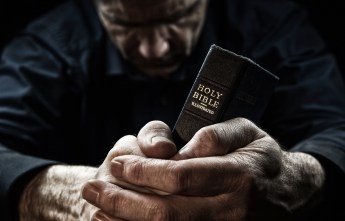 For, when we get to verse 9, we see that the exhortation to the ladies is to be done “likewise”, or, after the manner of, the prayer and spirituality exemplified by the men. For myself as a man, I’m reminded of the importance of my prayer life, and my example of spirituality in private, as well as in the church. Further, when I’m the Christian I ought to be, I’ll then have the discernment to help my wife and daughters to be the modest ladies the Lord desires, as well as the have ability to teach the ladies under my influence to do likewise.
 1 Timothy 1:12 And I thank Christ Jesus our Lord, who hath enabled me, for that he counted me faithful, putting me into the ministry;
 Baptist Journal